Showing posts with label Epic Fantasy. Show all posts

Friday, May 16, 2014

Mistborn by Brandon Sanderson

Mistborn: The Final Empire (Mistborn, #1)Mistborn: The Final Empire by Brandon Sanderson

My rating: 5 of 5 stars


Mistborn is set in a world where people have a special magical ability, allomancy. They can manipulate metal to endow themselves with specific abilities.  The Final Empire is in the stranglehold grip of a tyrannical ruler, the Lord Ruler, considered a God, and his enforcers, the Inquisitors.  The world is a place of overt injustice and ecological disaster.  The ruling class manipulates and abuses the lower classes, who are enslaved (skaa). 

There is one man who is determined to dismantle this system, the only man who survived the worst hell, The mining Pits of Hathsin, where atium, the most powerful metal for allomancy is mined and controlled by the Lord Ruler. Kelsier is a mistborn, a person who has the ability to manipulate all the known metals, and has found another one that he feels is powerful enough to kill the Lord Ruler.  He has assembled a group of incredibly skilled allomancers who work as thieves, and a new addition, a young female street thief named Vin, who might just be the most powerful Mistborn of all.

Sanderson has written a novel that combines several genres together in one punch:  the caper thriller, political drama, martial arts historical action, coming of age drama, epic fantasy, and even a bit of star-crossed romance thrown in.  And it's a great mix.  While this book is quite long, and it takes a while to get a feel for the world-building and the magical system, it's intriguing the whole way through. 

The characterization shows a deft touch, with layered portrayals, and gradual revelations of the leads.  Kelsier is appealing in his flaws and his strengths, a charismatic man who truly believes in what he's doing, even if his actions are not strictly moral.  Vin is a good stand-in for the reader, normal enough to gain a sympathetic connection from the reader.  She is also deceptive in her normality.  While Kelsier seems like he's the one to save the day, the reader might just be surprised at what little Vin can do.  The secondary characters round the story in a desirable manner, each character serving a specific function. 

Sanderson tackles some important issues in this novel.  Ecological mismanagement (something we know a lot about with our rapidly escalating climatological changes and their effects on the world and even the economy), for one. Also the lack of ethics in a system of vast inequality where the rich are very rich and can commit crimes without reprisal, and the poor are desperately poor, with no rights.  How this system in itself contributes to societal breakdown and criminality as the poor have little resources to do other than commit crimes to improve their situation in society, and they have no protection under the law.
 
Vin is placed in a situation where she sees both sides of the equation and can understand that while not all the nobles are bad, the system itself is broken and needs to be changed.  Through her eyes and Kelsier, we are able to evaluate the ethics of Kelsier's plan and make up our own minds.  Although seeing the horrible actions of the Lord Ruler and his bullyboys, and the way they manipulate and abuse the skaa, it wasn't difficult for me to believe in what Kelsier is working for.

While this is a thoughtful book with some serious subject matter, it has plenty of action and fantastic magic battles for the action-craving reader.  The allomancy concept is fascinating and provides a very fertile foundation for plenty of intriguing magic-driven scenes, many action-oriented.  It took me a while to get a good understanding of the allomancy principles, but once I started catching on, it made sense and adds up to a fun read. I liked how it has plenty of twists and turns and builds to an exciting climax. And I think that it was far from predictable.

"Mistborn" is a fantastically complex novel that offers plenty of action along with a fair amount of food for thought.  I can see this is going to be a great series to follow. This definitely earns five stars from this reader.


View all my reviews

Monday, April 15, 2013

Magician: Apprentice by Raymond E. Feist

Magician: Apprentice (The Riftwar Saga, #1)Magician: Apprentice by Raymond E. Feist

My rating: 5 of 5 stars


Magician: Apprentice is an appealing introduction into an epic fantasy series that a newbie can enjoy.  It offers a young hero who is just at the beginning of his journey to find his purpose in life.  Feist offers a fantasy world on the brink of war from a threat that has the capacity to bring great change to Midkemia as they know it.

While the world has a typical medieval-type feel, the variety of races presented give the world an incredible texture. I loved the descriptions of the elves and their way of life, how they are similar and different from the Dark Brotherhood, Elves who have fallen into a darker way of life.  I have to say that the dwarves really caught my attention.  Their beliefs, values and their skill at fighting and navigating the mines of the Stone Mountains.  Of course, loved the dragon!

I wasn't sure about the Tsurani storyline initially, but it takes this story in a different direction from what I initially expected. It sets up an incredible culture clash takes this novel to a wider focus as the Midkemians have to work together to stave off the invasion of forces from another world.

Initially, it seems that Pug, our young magician apprentice, is the center of this story.  But it becomes clear that various characters gain the focus of Feist.  Starting out like a coming of age story, and I suppose it continues to be one in some way, this story becomes one about people dealing with their world being invaded by a formidable group of people whose values are completely alien to their own, and who seem invincible.

One detractor I'd have for this story is that it's not a standalone.  The story doesn't end on an obvious cliffhanger, but you definitely have to keep reading to find out what happens to all the pivotal characters.  With a massively overflowing to read list, I am not eager for too many series to add, but the strength of the story and the good writing here, guarantees I will be back for more.


Fantasy Beginner Rating (explanation: Scale is based on whether this is a good book for beginner fantasy readers or it is better for one who has read a lot of fantasy.  High-Good starter book.  Medium-Okay for a beginner.  Low-May be confusing for a novice fantasy-reader.):  High.


View all my reviews

Friday, March 08, 2013

The Crown Conspiracy by Michael J. Sullivan

The Crown Conspiracy (The Riyria Revelations, #1)The Crown Conspiracy by Michael J. Sullivan
My rating: 4.5 of 5 stars

The Crown Conspiracy is perfect for readers who enjoy epic fantasy, but in a smaller package. When you have the time and energy for a 500 or more page epic, why not? But if you want a good historical fantasy tale that is shorter but doesn't lack what you enjoy in the genre, then it's great to find one. This is a good choice if you have encountered that dilemma. When I developed a renewed taste for fantasy as an adult reader, I looked at different fantasy novels that many established fans of the genre recommended, and this one continually came up. I've had this on my to read pile for years, and fortunately, my library had a copy. I had a ball reading it.

Characters:

A good writer can use an economy of words and bring a character to life. Most of my favorite authors are ones who excel at this. I would say Sullivan acquitted himself very well in this area. The portrayal of characters in this novel gave me what I need but also left some mystery. Some characters more than others. He reveals most of their personalities through what they do and say, instead of in long descriptions of them or telling their histories. That's okay with me. I like a story that keeps moving.

As far as characters that stood out the most:

I definitely want to see more of Esrahraddon. But then wizards have that effect on you. The more mysterious the better. Besides Hadrian and Royce, the lead characters, I have to say my favorite was Myron. His sense of wonder about the world (which makes sense considering he was in a monastery for over 30 years and most of his life at the age of 36). He has some of the funniest lines in the book. He's utterly captivated by horses, for instance. He's never seen one before, and he thinks they are brilliant. The same goes for women. You can't help but laugh at him, but it's in a gentle way, because he's really a sweet guy.

Other characters grow on you, such as Prince Alric. He's pretty much a pompous jerk initially. But he comes into his own. You realize that he's not different from Myron. Merely a person shaped by his experiences. He comes to realize that being King is not just luxury and privilege, but also a lot of responsibility and discomfort and self-sacrifice. He learns that the hard way. He also learns who he can trust, and that is not always who he might initially think.

Hadrian and Royce are two of those amiable rogues that make fantasy so fun. They are thieves and proud. But they have honor, in their own way. I like how they end up saving a kingdom, the unlikely heroes of this piece. Although they might be criminals, they are never the bad guys in this book. I liked that distinction. Sometimes you can be on the wrong side of the law and not be a bad person (I am not advocating breaking the law, mind you). Sometimes that law isn’t necessarily fair across the board or makes it hard for you to do what’s right. Or maybe you’re just a criminal who is otherwise a decent person. I don’t see why it can’t happen, at least in theory.

I liked that the characters’ motives aren’t necessarily crystal clear initially. You have to read to see the story develop (sounds like a no-brainer) and what choices the characters make that will define them ultimately, or at least elucidate who they are. There were some nice twists and turns along the way that I wasn't expecting. While some of the secondary characters are less developed, that’s only to be expected, unless you want a 1000 page book, and I definitely don’t.

The World of this Novel and Magic:

What could have been complex world-building instead is simply explained, which is a relief. I like books that have good world-building, but I don’t like things so complicated that I can’t figure out what’s going on or I am drawn out of the story and get bored. The political themes are a constant undercurrent of the story as there is a struggle between the imperialists, nationalists, and royalists, and the main characters get caught up in this struggle on a personal level. The religious foundations and spiritual beliefs of these countries also play a role in the storyline, since the governments are more or less based on the founding/creating gods worshiped. When Myron explained all this to Royce and Hadrian, I admit I was captivated. It made sense, and at the same time, it was rather sophisticated how the ancient past related to the present of the world at the time of this book. Albeit subtle in rendering, magic is part and parcel of this world, used as another instrument to wield for everyday uses. I especially loved Esrahaddon's prison. It was unnerving and yet fascinating that magic allowed such an invention. And the fact that they would go to so much trouble just to keep one person locked up made me long for more information about this unique individual. I wish that Astria had been able to demonstrate more magical ability. She only got to do a couple of simple magical things, and with her role being so important to the story, it would have been nice to see more of her. Perhaps Sullivan didn’t want magic to be a fix all in this book. With that as a presumption, I can understand why he kept magic low key in the story overall.

Overall, I was quite satisfied with this story. I think it was a very good fantasy adventure tale. While I have read some epic fantasy stories that have more wow factor, I think this is one that sneaks in on you and delivers in a way that can’t be questioned. It harkens back to the older adventure tales, such as Fafhrd and The Gray Mouser by Fitz Leiber or even Elric of Melnibone’ by Michael Moorcock. Shorter stories that are great reads in their own way even if they don’t seem as majestic as Tolkien. From reading this work, I would say that Sullivan definitely has a love of this genre, and he created a story that treats it with respect.

I definitely want to follow this series, and it’s gratifying that these books were written in such a way that they are self-contained despite being related to each other. I would recommend The Crown Conspiracy to fantasy readers, and those who want to give the genre a try.

Overall rating: 4.5/5.0 stars.


View all my reviews

Saturday, April 21, 2012

Daggerspell by Katharine Kerr

Daggerspell (Deverry, #1)Daggerspell by Katharine Kerr
My rating: 4 of 5 stars

Daggerspell is an epic fantasy novel built on the idea of reincarnation. If we have failed to fulfill our destiny in one life, we are compelled to return to this life in another form to do that. As I read this novel, I was confronted with my feelings about that inalienable destiny. There are some people that you have in your life that seem only to bring pain and hardship, and the comfort is that when you leave this life, you leave that pain they cause you behind. In this novel, that is not the case. And more importantly, a person cannot run from themselves and the anguish their own actions will deliver them. In some ways, that was a bitter pill to swallow as I read. The blessing in this novel was that one man, Nevyn, which sounds like ‘no one’ has lived through three lives and walks that anguished road with those people who he failed to help the first time.
Another integral part of this novel is the Welsh-like feel to their world. I’m not an expert on Welsh language, so if I’m wrong, I apologize. But it felt as though this novel used some of the Welsh language particulars and it felt pretty distinct and authentic to me. I was afraid that the names and the language would be an issue, but it wasn’t. After I read the novel, I read through the glossary, and surprisingly, I was able to discern what most of the terms meant through context.

The Characters:
Nevyn and Jill were standout characters for me. I felt deeply for Nevyn. The huge burden of seeing people he had cared for in the first go-round suffer through their Wyrd (destiny) again and again until they got it right. That was tough. I loved that he had followed his own destiny, not without loss or sacrifice, and had used this incredible skills as a dweomerman (magician/wizard) to help people and to fight for the forces of light. In the first life, he made a selfish choice, and it cost the life of a woman he loved. He had vowed to help her find her destiny, and it took him three life cycles to do it. That’s determination. Jill was young but she had substance and a strong heart. One of her choices in this novel gave me heartburn. For a romantic, I was surprised I didn’t want her to follow that path and go in another way. I’m glad that this worked out despite my apprehensions about it. Cullyn was also a compelling character. He had me worried a few times. He was a man who had one heck of a wyrd to work out, and it was a rough one. What I loved is that he was able to overcome that dark destiny through the power of his integrity and love for his daughter. Rhodry was a character that didn’t quite convince me he was worthy of Jill. He was a decent person, a little spoiled, but I didn’t feel he was Jill’s wyrd, at least not in a good way. I guess the author knows better than me about such things. In the first life cycle, it was like watching a car wreck before it happens, I mean literally. That really took me out of my comfort zones. I was actually shouting at the book, saying, “Please don’t do that.” It took some fortification to keep reading after that, but part of me couldn’t let go of this story because like any good fiction novel, it made me ask the central question. “What happens next?” I’m not a believer in reincarnation, but the way things work out for the characters in that life cycle kind of made me glad that it exists in this novel.

Magic and Magical Folks:
I loved that Jill could see and interact with the Wildfolk. Especially the cute gray gnome who was often her boon companion and her comfort through her tough young life. I liked this idea that those marked by the dweomer are able to perceive the Wildfolk. It was also interesting how many ‘normal’ folks feared the magic and many more didn’t even believe in it. It seemed strange to me since this felt so real, and their lives were deeply affected by the power of the magic around them. I appreciated how within this landscape of humanity there were pockets of legendary creatures, such as a dwarf metalsmith who gives Jill her silver dagger, and the Westfolk, who are actually elves. I really liked the elves!

My final thoughts:
I went into reading this cold. I had never heard of this book until it was recommended on the fantasy group. I saw it at the bookstore and thought, “Why not?” And I am glad I read it. I think the writing was strong, the storyline interesting, although a bit on the tragic side in some ways. It felt intricate and complex and deep, and that appeals to me. The idea of having to work out the consequences of the choices you make in life resonates with me, and for a foundation of a fantasy novel, it works surprisingly well. I think I would like to continue this series to see where Kerr takes this story and the characters next. I recommend it to readers who enjoy epic fantasy.


View all my reviews

Wednesday, May 25, 2011

The Black Company by Glen Cook

The Black Company (The Black Company: Books of the North, #1)The Black Company by Glen Cook

My rating: 5 of 5 stars


It’s amazing how well military and fantasy seemed to mesh in this story. The Black Company is an elite mercenary unit that holds two values sacred: Committing fully to any commission they take on, and watching out for their fellow members, their brothers in the unit. This unit consists of hardened fighting men, some of whom happen to be wizards, and our narrator, Croaker, who is the annalist (records the history of the unit) and the doctor of the unit.

The world they live in is plagued by war between the Rebels and those who serve the Lady. After leaving their present commission for a minor potentate in Beryl (a dead end that could have ended up with them all dead had they not found a way to ‘honorably’ terminate their employment), they take a commission with one of the twelve extremely scary Taken (a cabal of undead wizards who serve the Lady), an androgynous figure called Soulcatcher. Soulcatcher has the tendency to speak in various voices, male and female, sometimes at the same time. The Company knows there is something not right about Soulcatcher. Soulcatcher is probably evil. But for the Black Company, they don’t look at morals that way. Their greatest ethical commitment is to put in a good day’s work for their present employer. The problem is this job is going to take them into really nasty places, and cause some of the men of the Black Company to reevaluate their morals for serving their questionable employer, particularly Croaker.

The writing style in this story appealed to me, with a brisk narrative that managed to convey exactly what I needed to know. The humor is subtle, and the depiction of violence is done very well—not excessively gory, but clearly expressing the ugly nature of war. As I mentioned above, the fantasy elements went hand and hand with this military adventure. The use of magic was a weapon used by both sides in the military conflict. The wizards in the Company were quite the characters, often having competitive showdowns with each other that were great comic relief.

I appreciated the time spent to bring the characters to life. Although these are guys who work for pretty much anyone who can pay for them, I felt that they were honorable men in their own way. Croaker was a good narrative choice, because he was a seasoned soldier who had seen a lot, and pondered what he experiences in a way that brings the reader right into the narrative, along for the ride. He’d been in the business too long to be morally righteous in the traditional sense; but there were things that he and the guys in his unit definitely wouldn’t stand for. Croaker would be one of the first to admit that most of his brothers sit at various points on the evil spectrum. But there is evil, and there is worse evil, as they soon come to find out. The problem is trying to figure out which side is worse.

Another standout character in this story was Raven. He was, well, scary, but tremendously fascinating. A man who joins their unit shortly after they take on the commission with Soulcatcher, he is driven initially by revenge. A formidable killer who scares even the hardened men of the unit, but with a sense of honor that causes him to intervene when another group of soldiers murder a village of children, and gang-rape a nine year old girl. That girl and her grandfather essentially become part of the unit, and Raven becomes like a surrogate dad to the little girl called Darling. This unlikely adoption of a mute little girl and her grandfather adds to the rag-tag family atmosphere of the Company, as they all end up becoming fond of the girl and her grandfather.

Shades of gray. This story is definitely about that spectrum between black and white. It touches on the fact that war is more often the means through which figures in power work out their political squabbles, and less about doing the ‘right thing’ or righting wrongs. And the puppets of their war are working men, getting paid to fight their battles. That doesn’t erase their individual responsibilities for the wrongs they do, and they carry those burdens in the ways they can best manage. But at some point, one has to wonder when it’s time to walk way, to save what’s left of one’s own soul. That’s what Croaker struggles with.

I like that fantasy can go to these places that I wouldn’t necessarily explore out of the fiction setting. The military life is not one I would choose for myself. However, I respect those in the military a lot. Like any profession, a soldier has his own set of ethics and rules, and the good and the bad that goes along with his job. Cook illustrated the inns and outs of military campaigns very well here, the grueling days and nights, and how war isn’t always some crazy, dramatic battle. Sometimes it’s about the long waiting, the even longer marches, and the deprivation when supplies are down, losing men faster than they can be saved, and digging in while the Company is surrounded by the enemy. And everyone has their part to play in the conflict, even if it’s just cannon fodder (sadly enough).

I’m on a roll. I’ve liked most of the epic fantasy I’ve read so far. But this one stands out with its military esthetic, which was done very well. I read this story out of an omnibus collection of The Chronicles of the Black Company, and I’m glad I went ahead and bought it because I want to read more of the Black Company’s adventures.


View all my reviews

Monday, April 18, 2011

The Warded Man by Peter V. Brett

The Warded Man (Demon Trilogy, #1)The Warded Man by Peter V. Brett

My rating: 5 of 5 stars


At times, I believe that humanity is doomed to destroy itself. Actually, I feel that way a lot, although it saddens me. Which is why I prefer reading fiction that is hopeful, or with humans triumphing over the destructive forces within them or around them. Tales in which the monster of the story is a fantastical beast of the inhuman variety, defeatable, even if it requires cost and sacrifice on the part of people.

I couldn’t even imagine living in a world in which every night, demons take over, and prey on humans. Fear becomes the primary motivation. One’s life is lived around the rising and setting of the sun. The only thing that protects humans from the demons is the wards, which must be assiduously maintained. That is the existence of the characters in this book, and it affects them all in different ways. Surprisingly, despite this ever-present menace, people still manage to have their own little dramas, squabbles, and tendencies to treat each other poorly. You would think that human spirit would triumph in these dark circumstances? Not so much. Or maybe it does. You’d have to stay tuned to see.
The Warded Man focuses on three main characters: Arlen, Leesha, and Rojer. Both Arlen and Rojer lost their mothers to the demons, their lives and futures shaped by these ugly experiences. Leesha’s mother is like her own personal monster. She’s harsh, cruel, amoral, selfish, and scheming. Leesha has vowed to be nothing like her. She finds a calling as the apprentice to the Herb Gatherer (the healer of all diseases and wounds) in her town, a way to find meaning in her life, other than being wife to the man who told lies on her and ruined her trust and her reputation along with it. Her decision to work with Bruna, the ancient Herb Gatherer for her little town, will lead her onto a path that intercepts with Arlen and Rojer’s path, and it won’t be an easy journey for any of these three people.

Although this story started out slow, and I was dismayed at depictions of human nature at its worst, ultimately I was vanquished by this engrossing story. It was a slow conquest initially. I found myself wanting to keep reading, and after a while, I couldn’t stop reading. The demons were very scary, and their attacks on the humans downright horrific. The sense of entrapment, fear, and the lack of options in the face of a supernatural threat that seems unbeatable really got to me. I wanted to see someone find an answer. I wanted someone to step forward and to find a way to prevail against the demons.

People have been waiting for the Deliverer to come back to protect them from the demons. Will the Deliverer come, or will the people have to save themselves? This story might be about demons on the surface, but deep down, the real theme of The Warded Man is the everyday sort of courage. The courage that keeps a person going without losing hope, and giving in to the darkness. A very important lesson that this book taught me is that the hero is within you. You can’t always wait on someone else to save you. You have to save yourself. And once you’re ready to do that, you might find that you can help others to do the same for themselves and for those who are in need of help and who truly are incapable of fighting for themselves.

This could have easily been a loss for me had the story been written differently. Bloodthirsty demons preying and always destroying people, seeing the good guys never win, doomed to continually destroy themselves and each other, and unable to triumph over the obstacles that they fight against, has no appeal to me. But seeing people fight back, taking back the night and renouncing the power that fear can hold over a person, now that interests me.

And I have to admit, the Warded Man was absolutely cool as all get out. He was a total bad*ss, a man who created himself from scratch, and wears the scars to show for it. Together with Leesha, and Rojer, they make an awesome team. If I ever had to fight demons, I will call them in for my reinforcements. They are my kind of demon hunters. This story inspires me to fight my own demons in my everyday life. And that’s the kind of hopeful message I need right now.


View all my reviews

Sunday, February 20, 2011

The Lies of Locke Lamora by Scott Lynch

The Lies of Locke Lamora (Gentleman Bastards, #1)The Lies of Locke Lamora by Scott Lynch

My rating: 5 of 5 stars


I have to say that I was very impressed with this story. The worldbuilding was excellent and distinct to me. The setting of this book was like Pre-Renaissance Italy, with Faerie architectural elements and fantastical magic thrown in, but never overwhelming. I especially appreciated that Mr. Lynch went with a group of characters who were admittedly seedy, but utterly lovable, The Gentlemen Bastards. This whole world is very much on the edge of unpalatability. You can see and smell the filthy and unsavory environments. This story is full of cutthroats and unscrupulous criminals of all kinds. And there is the mafia element. I give the Yakuza (Japanese mafia) and the Russia mafia a free pass, because there is something very fascinating about them to me. But I really dislike the Italian mafia. Maybe this book was therapy for me, because I had to deal with the whole “Made Man” vibe, but it wasn’t the eyesore that I expected. Probably because the Gentleman Bastards are mainly swindlers and thieves, not blood-thirsty murderers with no code. But they walk in this dangerous world, and often face the nasty aspects (and characters) that end up with people dying painfully and in very bloody ways.

I’m touchy-feely when it comes to characters when I read books. I read for pleasure, and I need to have that connection to the characters in books that will end up being favorites. I totally had that with this book. From the beginning, Locke won me over. He’s one of those characters that literally steal their way into my heart. He had this ability to be a thorn in people’s sides, but it’s not from a mean spirited/cruel standpoint. It’s just like he’s a little imp and he can’t help himself. He wasn’t perfect, and I loved him for it. Locke is the planner of the operation. He’s not the muscle, and he’s not even the most book smart. In fact, he’s scrawny and small, and a terrible fighter. Funny, how his personality is so larger than life. Each member of his gang plays an important role, and that’s outside of the fact that they are his friends, his adopted brothers. Locke has to learn a lesson about loyalty as a very young man, lessons that he never forgets.

I do love a good coming of age story, and so I liked how Mr. Lynch starts this story with Locke as a very young boy, and shows him growing up, and how he ends up being the leader of the Gentleman Bastards. He also shows how Locke’s relationships with his boys develop. By the time the story gets to present day, I have already established a bond to these guys. I like how everything ties together in this story, from the flashbacks of Locke and the other Gentlemen Bastards as a boy, the anecdotes about the lands in this book, their beliefs, the way that the criminal and societal structures develop, everything. This is definitely a book where no parts are just throwaway filler. It all ties together, and I appreciated that my attention when I reading was rewarded with a ‘payoff.’

The Lies of Locke Lamora is not a genteel or gentle read. The language and talk is often quite vulgar and rough. It didn’t bother me, because this is the world that Locke lives in. He might inhabit a dukedom full of rich nobles, but they live up in the clouds, and he lives down in the dirty, rough streets of Camorr. It’s the real world, not the pretty one. This book is about criminals; and while the main character are lovable, admirable men with a highly-developed sense of ethics, they are thieves, swindlers, and liars. However, there is no question that they won my loyalty. This is a book where there are shades of gray, and bonds between the characters are complex. It’s not always just about friendship and loyalty. It’s as much about least cost differential, and do it or die kind of relationships. The people you have to ‘deal with’ because you don’t have much of a choice. You don’t have to like them. Heck, you might hate their guts even. Kind of real life, but ramped up for those of us who are fortunate to live in a saner, safer everyday world. The suspense inherent in this world made for an exciting read. There were also very welcome humorous moments that had me cracking up; and the bonding between Locke and his friends, the sage advice given to him, in a very earthy way by his mentor and leader Chains, and the family they formed was heart-warming.

If you are like me, and you don’t normally like the whole wiseguys/mafia thing, don’t pass this book by just for those reasons. Yes, there are some violent, cruel elements in this story. However, Locke and his boys always had my loyalty, and their actions never made me lose faith in them. On the other hand, if you do like the caper stories where the small guys work together to get their piece of the pie, and you are rooting for them the whole time, you should read this book. This one is going on my favorites list, and I am excited read more of the Gentleman Bastards’ capers.


View all my reviews

Wednesday, February 02, 2011

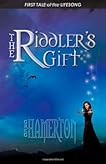
The Riddler's Gift by Greg Hamerton

The Riddler's Gift (Lifesong, #1)The Riddler's Gift by Greg Hamerton

My rating: 5 of 5 stars


When I read a really good book, it's hard to write a review, because my words don't measure up to what I have read as an example of good writing. But, I do my best. Let me make it clear that I'm hardly a critical scholar when it comes to fantasy. Before I added this to my epic fantasy shelf, I checked out the definition of epic fantasy. As I read the description of epic fantasy elements, I ticked off a mental checklist, and this book fits all the descriptions of epic fantasy. Of course, as I said, I'm not an expert, but I felt that Mr. Hamerton wrote a story that took what was expected in an epic fantasy read, and did it very well, writing a story that mattered to him and captivated me as I read.

The Magic System

Interesting, and very complex. The magical system was one part science, one part high mathematics (those parts had me scratching my head a bit), one part spiritual, and one part philosophical. At times, it went a little over my head, but that’s okay. I like to feel that I don’t have everything all figured out when I read a book. I liked that the magic had rules to it. The magic couldn't come out of nowhere. It had to have a source, and the source could be depleted. In essence, even the most powerful wizard or magic-user could be magicked out. There was balance, although the ‘dark lord’ character, Cabal the Darkmaster, wanted to take that balance and shift it so he controlled all the magic available, so he could rule over all the lands. Thankfully, the good guys are fighting to keep that from happening.

Characters

The main character was a young woman named Tabitha Serannon. She was an endearing person, seemingly normal and not overly endowed with any particular strength, or so it seemed. Her gift was not something she thought greatly of. Her talent for music, and a good voice. If anything, it was a way to provide a living for herself, and it made her happy. Her mother was a Lightgifter (essentially a type of good magician with the power to heal using the force of light), and she one day hoped to follow in her footsteps, finding her parents’ simple life as farmers not to her taste. As always, the yearning for adventure becomes a double-edged sword, and this young woman goes through a baptism of fire that is as believable as it is stirring. Although she has a bit of prodding along the way from a enigmatic figure named Twardy Zarost, otherwise known as the Riddler, nothing comes easy to this young woman. Through it all, I found her to be an engaging, likeable heroine. There is also Garyll Glavenor, the most formidable warrior in the land, the Swordmaster, who commands the Swords, an elite guard of warriors who protects the kingdom of Eyri. Love blooms between the couple, a love that is put to the test over the course of this book, each thinking they are not good or right enough for each other, and that life leads them in different directions. There is also Ashley Logan, an apprentice in the LIghtgifters who also will face a very harrowing experience in this novel. And Mr. Hamerton gives us a truly harrowing villain in Kirjath Arkell, a Shadowcaster who is given the job of retrieving the lost ring coveted by the Darkmaster. You can guess where the ring ends up. Mr. Hamerton brought these characters to life, and I felt their pain and suffering as they fought an epic battle against the forces of dark, with the power to overwhelm them from the inside out.

Setting

Mr. Hamerton creates his own world that has a medieval feel. There is an added dynamic, in which the world is partitioned based on the deleterious effects of a power-mad wizard. Most people don’t seem to know this save the eight wizards of the Gyre, who go through some incredible changes to keep this secret and to maintain a delicate balance.

Themes

I’ll try to keep this from becoming too much of a book report and keep it simple here. The most dominant theme here is that each person fights an intimate battle against evil. Evil is a slippery slope. It starts out as a selfish need or thought that can lead to corruption. Each character in this book fights that battle, and some fight to the depths of their soul against succumbing to evil. It was very painful to see what some of the characters that I grew to love as I read this story went through, how they suffered, and their struggle against the effects of an evil that had worked its way throughout the kingdom. Although this message could seem fatalistic, I don’t take it that way. In fact, there is hope in knowing that we do have a choice. It might not be easy, but we can choose to do what’s right. We might fall, and fail ourselves and others, but that doesn’t mean the war is over. We pick ourselves up again to fight the next battle. So there is always hope, in the end.

Overall Thoughts

I want to thank Mr. Hamerton for the opportunity to read his book. Fantasy is one of my all-time favorite genres, but I am expanding my palate, trying to decide what I like in the various subgenres. So his offer to read his book was definitely one that I wanted to take him up on. Additionally, I like discovering gems in the literary world. Books that don’t get a lot of exposure, but are wonderful reads. This is definitely one of those books. His writing was lovely. There was an ease and a beauty to Mr. Hamerton’s use of language. He showed a poise in his use of language and the writer’s craft. I was completely engaged with this story, even to the point where it hurt physically to read some parts. When the story took a very dark turn, I didn’t despair, because I felt that I could trust Mr. Hamerton to bring to fruition a story that had a shining heart, which was what stood out to me from the beginning, despite some of the very dark elements. To be honest, I felt that this book was scratching the surface as far as potential for further stories, as there were elements that were left unresolved. But, I was satisfied at the progression and the conclusion of this story.

When an author approaches me to review his/her book, I am always crossing my fingers, hoping that I will enjoy the book and give the author some good exposure. After The Riddler’s Gift, I am happy to say that I loved this book, and I would recommend it to fantasy readers. From a layperson’s perspective, I would consider this good quality fantasy, and I doubt that many readers would find much at all to be disappointed about herein. I would guess it would be quite to the contrary, instead. At any rate, I know I enjoyed it immensely, and now I am waiting to read the forthcoming book(s) in this series.


View all my reviews

Tuesday, December 07, 2010

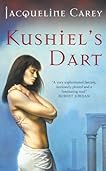
Kushiel's Dart by Jacqueline Carey

Kushiel's Dart (Kushiel's Legacy, #1)Kushiel's Dart by Jacqueline Carey

My rating: 5 of 5 stars


Just a disclaimer here: This will be a very difficult review to write. In order to truly review this book, I have to talk about my own views on things and how books affect me personally. I am opening myself up here, which always makes me squirm. If you are reading this review and you don't agree with my beliefs on things, that's totally fine. But, I am not going to deny how I feel, because that is very important to me when I review a book, since I read books emotionally and not from a detached standpoint. Having said that, let's get this show on the road.


I can think of a list of reasons why I should not have liked this book, and I will start there:


1. I really dislike long books. As I told a friend on here, I am a 'hit it and quit it' reader--meaning, I like to read shorter to moderate-length (and occasionally longer) books, get them read, and move onto the next book. This book was a massive 901 pages!


2. Prostitution and paid sex is something that I absolutely detest the thought of. It squicks me out that someone would pay for sex or have sex for money or financial support/livelihood. I generally avoid this content like the plague, although a big part of my nature is to occasionally challenge myself and my perceptions of the world. It's good for me, even if the process is painful at times. This book has a heroine who is a courtesan, although she is called more ugly terms that I don't use. Not only that, her prostitution is a form of worship and honor to one of her dieties (if you want to call Fallen angels dieties).


3. I don't like books where the main characters sleep with a lot of people during the book. Promiscuity and sleeping around is another area that I am just not comfortable with. I especially don't like reading about sex with no love/emotional bond. This book was kind of interesting in that Phedre's sex is a form of worship. She didn't love most of the people she was intimate with, but she loved Elua, Naamah, and Kushiel, and that was expressed through her sex with her patrons. The genesis of the sacred nature of sex in this culture relates to the fact that the angel Naamah would lay with strangers to support Elua and the angels as they traveled through the Terre D'Ange. It's probably necessary to mention that the patron can be male or female. Elua's dictate is Love as thou wilt, which eliminates any stigma to same sex relationships. Although I am more of a male/female romance reader, I don't necessarily dislike same sex interactions, so that wasn't a huge issue for me.


4. I am very vanilla about sex. Meaning, I don't like reading about kinky, dark, twisted sex at all. I especially don't like reading about sadomasochistic/painful/humiliating sex. I don't understand that need and it's not something that I personally feel okay about. The main character in this story is a masochist. She was pricked by Kushiel (who is the angel who is the keeper of Hell and punishes the lost). That punishment is out of love to save their souls. Phedre possessing Kushiel's Dart marks one of her dark brown eyes with a dash of red, which is a visible manifestation of her being favored or cursed to have a physiology which made pain pleasurable for her, including emotional pain (which means that she got sexually aroused by being humiliated or forced or treated badly by her partner). I'm not going to go into detail here. I think you could use your imagination. I'll just leave it with two words to express my feelings: Ick Factor! Most of the sex scenes were very uncomfortable for me to read. In the author's defense, this book has very elegant sex scenes (for the subject matter). Somehow, she managed to avoid them coming off as repulsive and tawdry. My repulsion was based on my own comfort zones being exceeded, instead of deliberate acts of prurience on the author's part.


5. I typically don't care for stories with a lot of political intrigue and situations. Surprisingly, I found that I really got into that aspect of this story, and I was quite enthralled with the tangled web of conspiracies against members of the royal family and nobles. I believe it was because Ms. Carey did a great job of entwining Phedre into this Gordian Knot in a very intimate manner through her adoptive father, Anafiel Delaunay. Phedre becomes Delaunay's bondservant, and is trained to be a master spy as well as courtesan. Her skills aid him in his secret avocation to the royal family, hearing and seeing all, in the line of her duties as a courtesan.


6. The whole cultural set up of this story is very different from what I am used to. Surprisingly, this part was the easiest thing to get past. When I read fantasy, I expect that the author will build her own world from the ground up, and that might include other religious beliefs. It's easier for me if the author founds a whole new religious world divorced from the real world. I can easily separate myself from what I know and accept the concepts from the story and read it with a fresh mind. In this book, Ms. Carey takes a left turn from Christianity, and creates a world in which the main diety worshipped, Elua, is the son of Jesus' blood from when he was wounded on the cross and its union with Mother Earth. The other members of the pantheon are angels that chose to fall to accompany Elua in his exile. In other words, turning their back on God to follow Elua. The people with these beliefs are called D'Angelines, because they live in the country founded by Elua and his Angels called Terre D'Ange (Land of the Angel in French). Christianity still exists in the world, and its practitioners are called Yeshuites, after Jesus' Hebrew name of Yeshua. I believe there are also Muslims, but they are called Akkadians. The people who correspond to the Celts and Picts of Alba (Britain) and Eire (Ireland) have their own beliefs, and the Skaldi, who are like Norsemen, worship the Norse pantheon. Even though it was pretty different, I thought it was a pretty creative cultural genesis that Ms. Carey accomplished in this story.


Yes, that's a lot of reasons why I shouldn't have liked this book. Despite these things, I loved this book. It was fascinating. It kept my interest. I cared about the characters. Phedre was a heroine that I loved. I didn't like her assignations, and I would sort of roll my eyes when she took another one, much like Joscelin did. But, I liked her as a person. I could see that she was being true to herself, and I couldn't fault her for that. I loved how she came from very humble origins and made something wonderful of herself. I loved her loyalty and her caring heart. I loved how clever she was. She used every thing she had been taught and all her assets to accomplish what needed to be done. Even though I didn't always like what she did, I respect why she did it. It was profound to see how her view of herself and her place in the world changed. People looked down on her for being a 'whore', but she was a great spymaster, a diplomat, and an incredible tactitian. I cheered for her to find her rightful place in her world, because she earned that after all she'd suffered and lost. I loved Joscelin as well. Although he was a bit judgmental at times, so was Phedre towards him, but in a different way. It was very clear how devoted to her he was, and he was very true to his beliefs, following Cassiel, the angel who still loved God, but felt that he had to follow Elua out of loyalty. I admired that he made sacrifices to follow his beliefs, but his love for Phedre often caused him to break his vows, which in a way showed how true to following Cassiel he was. Even though he was not the main character, my mind always went back to him, wanting to see what he was doing and how he reacted to the situations around him. All the characters were real and lifelike, some in a good way, some in a bad way. But, there weren't any disposable characters in this story, even if they played small roles. And when some of the characters I grew to love got harmed and died, it made for painful reading.


At first, I had a lot of trouble with all the names of the characters and people, and countries. But, after a while, it started to make sense, and I was able to connect them to an existing frame of reference pretty well. I think it was pretty brilliantly conceived. The various peoples were extremely culturally distinct, and I really appreciated the time that Ms. Carey took to explore their cultures. It was interesting how the D'Angelines had a lot of cultural superiority that they had to get past, in order to face a huge threat from within and from the warlike, intimidating Skaldi race.


What surprised me was that I found the military aspects very fascinating. Maybe I shouldn't be surprised, because I've always had an admiration for warriors and the culture of warriors. I thought that seeing the battles and war unfold through Phedre's eyes was very interesting. I liked seeing how she used her particular skill set to aid her country in winning the war. The sacrifices she made for her country were very admirable. She showed that although she wasn't a warrior in the traditional sense, her heart was that of a warrior, willing to give everything to win and prevail, even if that involved personal sacrifice and surrender.


This was a deep book. It took me through a gamut of emotions, many not comfortable at all. It truly was epic, and I really didn't get bored, surprisingly considering its length and complexity. There were some very unpalatable aspects to this story, and the values seemed very alien to what I feel I hold sacred. However, underneath there is a commonality. Love is sacrifice, love is giving. When something is important to a person, one devotes herself to it. Even though the creeds of the people in this book seemed alien, I could identify with the idea of holding something sacred in life, and that dictating one's actions.


As one can imagine, it's not easy to sum up my thoughts on a book that is so long and rather complicated. I think I have done as best as I can, and I won't make this review any longer than necessary. I have to be honest and say I highly doubt I'll keep reading this series. It's a huge investment of my time and energy when books are this long. And since it took me to some uncomfortable places, I'm not sure I want to go through that process any more with the following books. In my mind, I want to think of Phedre and Joscelin being happy, able to find a compromise that works for both of them, and having a great love. I want to leave things that way. The good thing is, this book is a keeper, and will have fond memories of these characters who came to mean so much to me. Perhaps I will reread this book one day to revisit this fascinating world of the D'Angelines.


View all my reviews